
Your car lets you know when something needs attention, and your brakes are no exception. Maybe you hear a squeal at a red light, or you notice a subtle shimmy as you slow down? These cues matter, and having your brake rotor lifespan explained in straightforward terms helps you decide when to schedule service and what warning signs to look for between appointments. Understanding a few key points keeps your car safer and your maintenance costs down over time.
How Long Do Brake Rotors Actually Last?
When it comes to brake rotor lifespan, there’s a lot more variation than most drivers realize. For example, a compact car that spends most of its life cruising on flat highways will experience far less rotor wear than a pickup hauling heavy loads through mountain passes. The daily conditions your vehicle faces play a bigger role in rotor longevity than almost anything else, which explains why mileage estimates can vary so widely.
The Mileage Baseline

Most rotors hold up well between 30,000 and 70,000 miles, though some last longer under the right conditions and with consistent care. That wide range reflects real-world driving differences rather than a single hard rule.
City drivers who brake frequently at intersections will wear through rotors faster than someone who spends their time on open roads with gradual, predictable stops. Keeping up with regular inspections helps you catch wear early and avoid the kind of damage that turns a straightforward rotor replacement into a larger repair bill.
What Accelerates Wear
Certain driving habits and road conditions wear rotors down faster than the mileage baseline suggests. Heat drives most of that premature wear. When your brakes generate more friction than the rotor can efficiently release, temperatures spike, and the metal takes on stress it can't fully recover from between stops. Here are some of the most common reasons rotors end up needing early replacement:
- Riding the brakes on long downhill stretches instead of engine braking.
- Letting brake pads wear too thin before replacing them.
- Frequent hard stops from highway speeds.
- Carrying heavy loads or towing regularly.
- Driving in regions with road salt exposure, which speeds up surface corrosion.
Every hard stop generates friction, which causes thermal stress within the rotor. Over time, repeated heat cycles cause warping, which shows up as a pulsing or vibrating sensation through the brake pedal when you slow down.
Front vs. Rear: Why the Position Matters
Not all rotors on your vehicle wear out at the same rate, so understanding the reasons for this difference can help you stay on top of maintenance and prevent small issues from becoming larger problems. Paying attention to how your brakes feel can give you an early warning before problems escalate.
The Weight Shift Factor
When you press the brake pedal, the vehicle’s weight shifts forward, putting more braking force on the front axle. As a result, the front rotors end up doing most of the work and typically wear out well before the rear ones. They often wear out tens of thousands of miles ahead of rear rotors, depending on your driving habits.
That’s why it’s important to replace front and rear brake pads and rotors at the correct intervals. Servicing only the front or rear brakes can lead to uneven braking, which affects both your safety and your vehicle's handling, especially during sudden stops. The best technicians always inspect all four corners of your braking system, not just the parts showing visible wear.
Rotor Thickness and Minimum Specs
Each rotor has a minimum thickness specification stamped on its surface. If a rotor wears down past this limit, it can no longer absorb and release heat as it should, which affects the braking performance.
Thin rotors lose their ability to manage heat effectively, and the consequences show up at the worst possible moments. When braking demands run high, such as navigating a steep downhill grade, those under-spec rotors can't dissipate heat fast enough. Stopping distances increase, and brake fade sets in, reducing your ability to control your vehicle’s speed when you need it most.
A technician can check the thickness of your front and rear brake pads and rotors during any routine brake inspection. Many shops include this check as part of a standard tire rotation.
Signs Your Rotors Need Immediate Attention
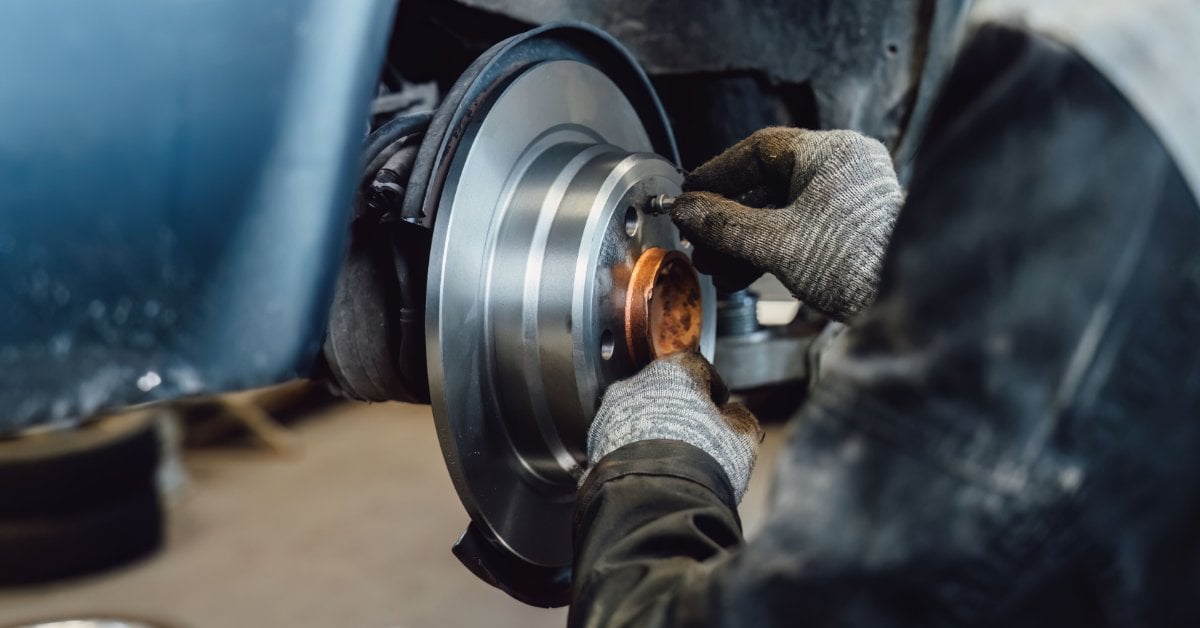
Your vehicle rarely stays quiet when something is off with the brakes. Once you know what to listen for and feel, those early signals are hard to miss. Catching them before they develop into bigger problems helps keep repair costs manageable and your braking system performing reliably.
What You Hear and Feel
A high-pitched squeal during braking often signals worn brake pads. Ignoring worn pads long enough can lead to metal-on-metal contact that scores and damages the rotor surfaces. A grinding sound at that stage means the rotor itself is taking real damage and may need replacement rather than resurfacing.
Pulsing through the brake pedal or vibration in the steering wheel points toward a warped rotor. Pulling to one side during braking suggests uneven wear between the left and right sides of an axle.
When to Get an Inspection
You don’t have to wait for obvious symptoms before getting your brakes checked. Sometimes, looking through the wheel spokes can tell you a lot about your rotors. If you see deep grooves along the rotor face or notice heavy rust and pitting, these are signs that a professional should take a closer look.
Even if there are no clear warning signs, it’s a good idea to schedule a brake inspection every 12,000 miles. Regular inspections give a technician the chance to measure wear and catch issues early, before they start to affect your braking performance.
Taking Care of Your Full Braking System
Rotors will last longer when the rest of your braking system is well-maintained. Keeping your brake fluid fresh makes a bigger difference than many drivers realize. Over time, brake fluid absorbs moisture from the air, which can lead to a spongy brake feel and cause internal metal parts to wear faster. Sticking to the manufacturer's recommended brake fluid flush schedule helps your entire system work smoothly.
It’s also important to choose quality replacement parts when servicing your brakes. Rotors made from lower-grade materials can warp and wear out more quickly, leading to more frequent replacements and higher long-term costs. Investing in high-quality components helps your brakes last longer and perform more reliably between service intervals.
With a detailed explanation of your brake rotor lifespan, you can stay ahead of brake maintenance and catch small issues before they turn into expensive repairs. If you care for your braking system regularly, it will continue to perform reliably whenever you need to stop.
When your brake components are ready for replacement, WheelerShip makes it easy to find the right parts for your vehicle. Browse our selection of front and rear brake pads and rotors to keep your braking system in dependable condition.